Madagascar, the fourth largest island in the world, is susceptible to a number of disasters, including disease outbreaks, drought, floods, pest infestations, sandstorms and tropical cyclones that disrupt livelihoods. Southern Madagascar is particularly susceptible to recurrent drought conditions that lead to poor harvests and decreased livestock productivity
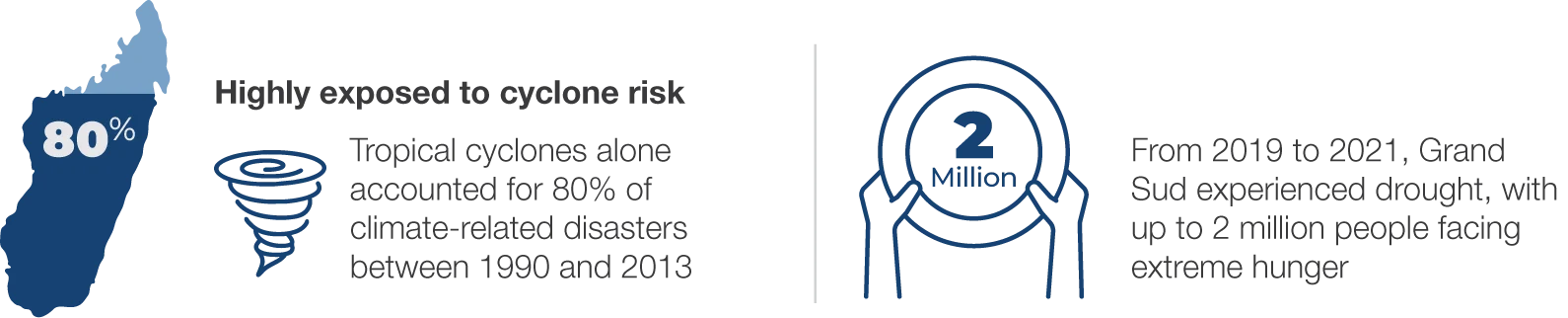
The country joined ADRiFi in 2019 to get assistance through paying premiums for the purchase of ARC Group sovereign insurance, initially covering drought - relat ed disasters. In November 2020, Madagascar became ARC’s first pilot country to take on tropical cyclone risk insurance
ADRiFi’s objectives in Madagascar are:

In this regard, the country received 100% premium payment support in its first year of being part of the program. Subsequently, the government has been mobilizing part of the drought insurance premiums from its internal resources. Further, the country has been fully supported to access tropical cyclone insurance through the ADRiFi MDTF.
The beneficiaries of t he program include the Government of Madagascar and its agencies involved in disaster risk management, such as the Malagasy Emergency Response Unit (CPGU), Ministry of Economy and Finance, and the General Directorate of Meteorology.
These agencies have bee n trained in risk modelling and profiling through the ARC Group’s in - kind contribution to the program. Ultimately, the program aims to support the most vulnerable segments of the population, particularly women and children, who are disproportionately affec ted by the impacts of climate - related disasters.
Results of ADRiFi’s intervention in Madagascar:
- Madagascar received a timely insurance indemnity payment that allowed for a rapid response during the 2019 drought and during cyclone Batsirai in 2022. It also received payments to address impacts of drought in the Grand Sud and cyclone Freddy in 2022 and 2023, respectively. The country has received close to $15 million in sovereign insurance payouts s ince joining the program.
- Enhanced ability to respond to disasters. The program has influenced a shift in the attitude of the government regarding disaster risk insurance.
- Effective collaboration between the program and local institutions and improved data management. Gender and social inclusion have been mainstreamed.