
ACFM is a Co-Financing Facility

The ACFM invests alongside the Bank in investment channels that meet its eligibility criteria for on-lending and financial support to Agri-SMEs.

ACFM loans are processed in parallel with the corresponding Bank loan. The specific terms of ACFM loans are determined on a project basis in application of the blended finance principles.
Agri-SMEs: The Backbone of Africa's Economy
Agricultural Small and Medium Enterprises (Agri-SMEs) are the driving force behind Africa’s economic and agricultural development and play a crucial role in food security, employment, and the continent trade dynamic:
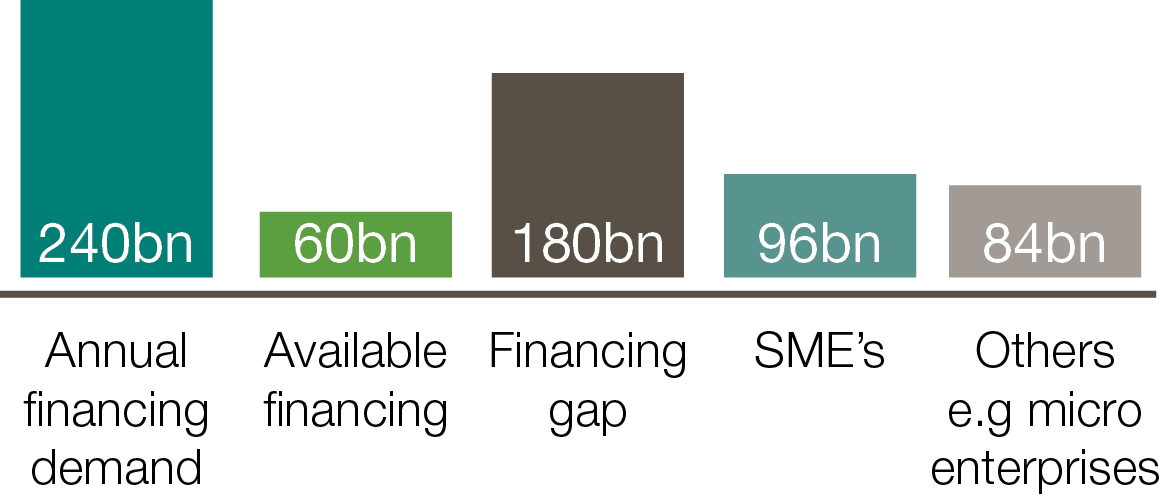
Agri-SMEs in sub-Saharan Africa face an estimated annual financing gap of USD 96 billion

60%
of Africa’s workforce is employed by Agri-SMEs

49%
of the agri-food system workforce in Sub-Saharan Africa is female
76%
of working women in Sub-Saharan Africa are employed in agri-food systems

75%
of Agri-SMEs in Sub-Saharan Africa struggle to access adequate finance, limiting their ability to grow at scale

3%
of Africa’s GDP potentially lost annually by 2030, due to climate change impacts on agriculture and food systems

65%
of food consumed in Africa is delivered by Agri-SMEs


ACFM's Strategic Alignment
ACFM’s work aligns with the Bank’s Four Cardinal Principles which include:

The Feed Africa Strategy
Transforming African agriculture to increase productivity, reduce dependence on food imports, and create job opportunities.


ACFM Catalytic Leveraging Effect
The ACFM maximizes its catalytic leveraging effect by mobilizing various resources to attract substantial financing for Agri-SMEs. It leverages multiple funding sources and partnerships, creating a multiplier effect that enhances the impact of its investments:
-
The ACFM leverages the African Development Bank ordinary resources through co-financing in eligible Non-sovereign Operations (NSOs).
-
The ACFM leverages other Trust/Special Fund resources in operations that aligns with its mandate, including the Affirmative Finance Action for Women in Africa (AFAWA), the Sustainable Energy Fund for Africa (SEFA), the Youth Entrepreneurship and Innovation Multi-Donor Trust (YEIMDTF), Boost Africa Initiative, The Business Investment Financing Track (BIFT)of the Global Agriculture and Food Security Program (GAFSP) and Mobilizing Access to the Digital Economy (MADE) Alliance.
-
The ACFM Leverages private sector resources, through deploying concessional finance and de-risking tools while adhering to the blended finance principles with the purpose of crowding-in private investors into Agri-SME investments.
-
The ACFM also leverages resources from sister organizations such as Development Finance Institutions (DFIs), Multilateral Development Banks (MDBs), and International Financial Institutions (IFIs) to further amplify its impact.
The ACFM targets a total facility level leverage ratio of at least US$ 2.5 for every US$ 1 committed from the ACFM Investment Facility. Of this, the private sector financing target will be at least US$ 1.5 for every US$ 1 deployed from the ACFM Investment Facility.
ACFM’s Dual Approach: Investment and Technical Assistance Facilities
The ACFM operates through two complementary facilities:
 Investment Facility (IF)
Provides catalytic loans aimed at increasing Agri-SMEs' access to finance and enhancing the commercial viability of projects with emphasis on gender equality and climate resilience.
Instruments:
- Concessional senior debt
- Concessional subordinated debt (up to 35% of IF resources)
Direct Beneficiaries:
- Commercial Banks and Micro-Finance Institutions
- Impact Funds
- Agribusinesses
Eligibility Criteria:
- Geographic focus on Bank's Regional Member Countries (RMCs) eligible for Official Development Assistance (ODA).
- Compliance with the Bank’s Environmental and Social safeguards.
- Alignment with the 2X Challenge Criteria for gender equality.
- Commitment to blended finance principles and climate resilience, with at least 30% of loans supporting green growth objectives.
 Technical Assistance Facility (TAF)
Aims to build the capacity of capital providers and Agri-SMEs, helping them meet ACFM's eligibility requirements and enhancing their bankability.
Instruments:
- Non-reimbursable grants
Direct Beneficiaries:
- ACFM Investees
- Private and public institutions that provide capacity-building services
Eligibility Criteria:
- Alignment with ACFM’s Areas of Intervention and Results Framework.
- Implementation in the Bank's Regional Member Countries.
- Contribution of at least 5% of the TAF grant by recipients.
- Grants must be used for non-profit purposes even for eligible for-profit organizations.
- Capacity to deliver technical assistance that supports Agri-SMEs’ growth and bankability.
FAQ
Frequently Asked Questions
If you don't see an answer to your question, you can send us an email
-
The ACFM is a Special Fund established under the African Development Bank to support Agri-SMEs in Africa. It aims to de-risk investments and catalyze private sector financing towards Agri-SMEs. The ACFM focuses on gender-sensitive and climate resilient Agri-SMEs across Africa including fragile states.
-
The ACFM mirrors the Bank's private sector operations, meaning that projects must be integrated into the Bank's pipeline to be considered for co-financing. Financing is available through the Investment Facility (IF) and the Technical Assistance Facility (TAF). The IF provides loans to eligible commercial banks, micro-finance institutions, impact funds, and agribusinesses, while the TAF offers grants for capacity building to its intermediaries and Agri-SMEs, project preparation to ensure high-quality Bank operations, and knowledge generation and dissemination. Interested entities should contact the ACFM Coordination Unit for application details.
-
The ACFM is managed by the African Development Bank (AfDB) through its Agriculture Finance and Rural Development Department (AHFR). The AHFR hosts the ACFM Coordination Unit (CU), which oversees the fund’s operations, monitoring, and reporting.
-
Yes, the ACFM is structured as a multi-donor fund. While it was initially capitalized solely by Canada’s Department of Foreign Affairs, Trade and Development (DFATD), it is open to future contributions from other donors, by signing a letter of contribution outlining their adherence to the existing Fund's scope and objectives.
-
The ACFM provides concessional loans to intermediaries, such as commercial banks, microfinance institutions, impact funds, and agribusinesses, to extend financing to Agri-SMEs. Additionally, the ACFM offers capacity-building support to its intermediaries and Agri-SMEs, project preparation to ensure high-quality operations in line with the Bank's standards, and knowledge generation and dissemination activities to promote best practices within the agricultural sector.
-
The ACFM operations systematically implement gender equality considerations. All projects must meet the globally endorsed "2X Challenge" criteria to promote gender-smart financing. Technical assistance activities are also designed using a gender lens to ensure women's empowerment across the agri-food value chain.
-
The ACFM adheres to the African Development Bank's operational safeguards, including comprehensive environmental and social standards. These safeguards ensure that projects funded by the ACFM promote sustainable practices, mitigate potential negative impacts, and respect social norms and local communities. Environmental assessments, social impact evaluations, and risk management frameworks are part of the project appraisal process, ensuring that funded activities align with ethical standards and sustainability goals.
-
The ACFM is set to operate for 20 years from its Effective Date. This period can be extended or shortened based on agreements between the Bank, DFATD, or the ACFM Governing Council.
-
The ACFM Coordination Unit closely monitors the program’s impact using a Results Famework that includes indicators for financial inclusion, gender empowerment, climate resilience, and market development. Annual reports and evaluations ensure transparency and guide future programming.
-
Interested stakeholders, including financial institutions, agribusinesses, and development organizations, can collaborate with the ACFM by participating in its programs, providing expertise, or exploring co-financing opportunities. To explore collaboration, contact the ACFM Coordination Unit within the Bank’s Agriculture Finance and Rural Development Department.