Climate and Disaster Risk Finance and Insurance (CDRFI) Overview
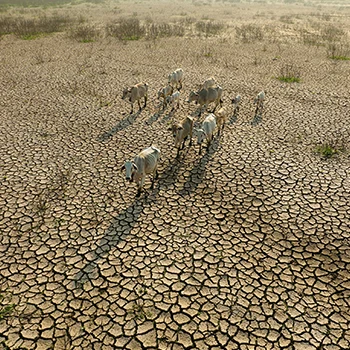

1,695
climate-related disasters
-
Africa’s agriculture sector, largely reliant on rainfall, faces significant challenges from climate shocks like droughts, storms, and rising temperatures, which threaten food security and economic progress. Insurance solutions play a critical role by offering financial protection and promoting resilience, helping farmers and businesses secure financing and stabilize incomes.
-
The Agri-SME Development and Innovative Financing Program mobilizes blended finance and de-risking tools to support agriculture, focusing on three core principles:
Mobilizing concessional capital to reduce investment risks
Designing and deploying a range of risk-sharing and risk-transfer instruments via a range of partnerships
Supporting the enabling environment by capacitating and coordinating an ecosystem that facilitates access to finance for agriculture value chains
-
Through the Bank’s Climate and Disaster Risk Finance and Insurance (CDRFI) initiatives ADRiFi and ACRIFA, the African Development Bank is bolstering resilience to climate change across Africa. ADRiFi partners with governments to build resilience, while ACRIFA aims to broaden impact by incorporating insurance solutions across macro, meso, and micro levels to address evolving CDRFI needs and scale sustainable, innovative insurance solutions.
Africa Disaster Risk Financing

In 2018, the African Development Bank (AfDB) launched the Africa Disaster Risk Financing (ADRiFi) Programme to bolster the resilience of African nations against climate shocks by promoting proactive, ex-ante risk financing. ADRiFi’s primary aim has been to build capacity among regional member countries, enabling them to assess and manage climate risks more effectively and make informed choices on transferring disaster risks to the insurance market.
Africa Climate Risk Insurance Facility for Adaptation – ACRIFA


The Africa Climate Risk Insurance Facility for Adaptation is designed to mobilize $1 billion in concessional capital to de-risk investments and expand climate protection through innovative insurance solutions. Partnering with the African insurance ecosystem, ACRIFA aims to enhance resilience and safeguard vulnerable communities across the continent.
Leadership
MEET CDRFI
Development effectiveness and quality in operations
The de-risking agriculture program is situated in the front office of the Director of the Agriculture Finance and Rural Development Department (AHFR)

Dr. Martin Fregene

Richard Ofori-Mante

Dr. Andrew Mude

Ilyes Bdioui

Donald Singue
FAQs
Frequently Asked Questions
If you don't see an answer to your question, you can send us an email from our contact form.
-
It is a Disaster Risk Financing and Insurance program of the African Development Bank established in 2018 to strengthen the resilience and response of the Bank’s regional member countries against climate shocks. The Programme promotes proactive climate risk management through proactive risk financing approaches.
-
The Africa Disaster Risk Financing (ADRiFi) Programme works by investing in risk insurance policies for national governments against climate shocks.It also supports the development of early warning systems, accurate climate data collection, and disaster risk financing strategies to prepare countries for climate-related disasters.
-
The Bank established the Bank established the ADRiFi Multi-Donor Trust Fund in 2021 financed with contributions from the Government of the United Kingdom, the Government of Switzerland, the United States, USAID the Government of Canada, the Government of Norway and the Government of the Netherlands. The programme has also mobilized additional resource from other funding windows including the Global Environment Facility (GEF), the Green Climate Fund (GCF), the Transition Support Facility (TSF) among others.
-
The African Development Bank has invested more than $100 million to assist 16 African countries and more than 5 million Africans to deal with droughts and cyclones. ADRiFi has improved financial protection for regional member countries against climate shockeenhanced risk knowledge and awareness, and enabled timely insurance payouts to vulnerable populations.This has led to better preparedness and response to disasters.
-
Several countries have benefited from ADRiFi’s support, including Madagascar, Malawi, Mauritania, Mozambique, Niger, The Gambia, Togo, Zambia, and Zimbabwe, among others. These countries have received insurance payouts to support rapid response to climate shocks.
-
All regional member countries in Africa are eligible to participate in the Africa Disaster Risk Financing programme by submitting a formal request to the African Development Bank and meeting the necessary requirements for participation in the risk pool. The Programme has Focal Points in AfDB Headquarters and regional Office for West Africa (Abidjan, Cote d’Ivoire), Regional Office for East Africa (Nairobi, Kenya), regional Office for Sothern Africa (Pretoria, South Africa).
-
ADRiFi is working to insure at least 10 million vulnerable people, particularly women and children, against climate disaster risks annually, while ensuring that communities are more resilient to the impacts of climate change. To facilitate this ambition, the ADRiFi Multi-Donor Trust Fund (MDTF), has undergone some key amendments which have been approved by donors to expand support beyond sovereign levels to cover climate risk at the meso- and micro-level insurance. This means that, going forward, entities like farmer cooperatives, producer associations, and financial institutions can benefit from the programme, enhancing climate resilience more broadly across communities.
-
ACRIFA is a framework of the African Development Bank working to mobilize $1 billion of concessional, high-risk capital, and grants to de-risk private sector investments geared toward the development and uptake of climate insurance solutions. It promotes resilience and adaptation through risk-sharing mechanisms.
-
The ACRIFA Framework is an approach towards effective de-risking of investments to build the financial and climate resilience of the African Agri-food system. It encompasses the scalable deployment of climate insurance through the public and private sector to address climate risk at sovereign, meso and micro levels. The framework emphasises the mobilization of global climate finance resources and channeling them through the ‘bundling’ and layering of insurance with concessional credit and other de-risking mechanisms, and scaling climate insurance to rural communities through agri-value chain aggregators and digital solutions.
-
ACRIFA’s main objectives include working through the African insurance industry to design and deploy targeted climate insurance solutions; encourage farmer aggregation as a means of scaling the reach of climate insurance and solving the client acquisition challenge; invest in capacity building, data and digital solutions and enabling environment support, and act as a means of channeling global climate finance towards resilience and climate adaptation solutions in Africa.
-
The changes in ADRiFi’s Multi-Donor Trust Fund have enabled a shift towards a more inclusive insurance approach, encompassed within the ACRIFA Framework that allows resources to be directed more flexibly to address varying levels of climate risk. ADRiFi is expanding to encompass a growing focus on expanding climate insurance solutions to reach a broader range of beneficiaries, from local communities to the private sector. This expanded mandate is covered under the ACRIFA Framework which is closely aligned with, and partially informed by, the lessons learned from ADRiFi, making it a natural extension for the next phase of ADRiFi. The two initiatives come together as the Bank’s Climate and Disaster Risk Financing and Insurance (CDRFI) initiatives.
-
ACRIFA works primarily through the African insurance industry and agri-value chain aggregators to avail climate insurance at the national level,at the meso level to financial institutions and aggregators and at the micro level to vulnerable African agricultural communities which are most affected by climate change impacts.
-
ACRIFA is funded through a combination of public, private and philanthropic sources, international partnerships, and contributions from various stakeholders committed to climate resilience.
-
Individuals or communities can engage with ACRIFA by accessing climate insurance products offered by a range of insurers and financial institutions, and through value chain aggregators such as cooperatives and agro-hubs. ACRIFA is also supporting initiatives, colleges and institutions providing climate insurance training and upskilling, and investing in policy and regulatory personell and processes that are working to scale the reach of climate insurance across Africa.
-
For more detailed information, you can read more from the ACRIFA brochure online and the ADRiFi brochure online or contact the Climate and Disaster Risk Financing and Insurance Program directly through their official communication channels at cdrfi@afdb.org